What to Wear and Pack for Your Sahara Trip

Visiting the Sahara Desert in Morocco is an exciting experience, but the weather can change quickly. Days can be hot, nights can be cold, and the sand can make things a bit uncomfortable if you don’t pack well. That’s why it helps to know exactly what to wear and carry with you. This is part of the vast Sahara Desert, which stretches across much of North Africa.
This guide gives you simple and practical tips that work for most travellers. You don’t need expensive gear or special clothes. You just need the right basic items that keep you comfortable while you enjoy the desert.
I will walk you through clothing, shoes, personal items, gadgets, and a few things people often forget. This way, you can relax and focus on the beauty of the dunes, the calm nights, and the clear desert sky.
From my experience helping travelers plan desert trips, the people who pack right are the ones who treat the Sahara as two trips in one, a hot daytime trip and a cold nighttime trip, rather than packing for just one or the other.
Best Time to Visit the Sahara
The most comfortable time to visit the Sahara is autumn and spring. These seasons give you warm days and cooler nights, which makes the whole trip easier. You can enjoy walking on the dunes, riding camels, and sitting outside at night without feeling too hot or too cold.
Winter is also a good time, but you need to be ready for cold nights. Daytime temperatures are pleasant, and the sky is usually clear. Many travellers like winter because the air feels fresh and the sand is not burning. Just make sure you bring enough warm clothes for evenings and early mornings.
Summer is the least comfortable season due to extreme heat. The sun can be very strong, and activities during the day can feel difficult. Some people still visit in summer, but most tours start very early in the morning to avoid the heat. If you want a calm and easy experience, it’s better to choose spring, autumn, or winter.
Check out this guide to learn more about the Moroccan Sahara and the activities you can enjoy there.
What to Wear in the Sahara
The weather in the Sahara changes a lot from one season to another, so it’s important to pack clothes according to the time of year you are visiting. Summer can be extremely hot, while winter nights can be very cold. Spring and autumn sit in the middle, with warm days and cooler evenings. Because of these changes, you should always choose clothes that match the season so you stay comfortable during your trip. Let’s go through this in detail.
What to Wear in the Sahara during summer
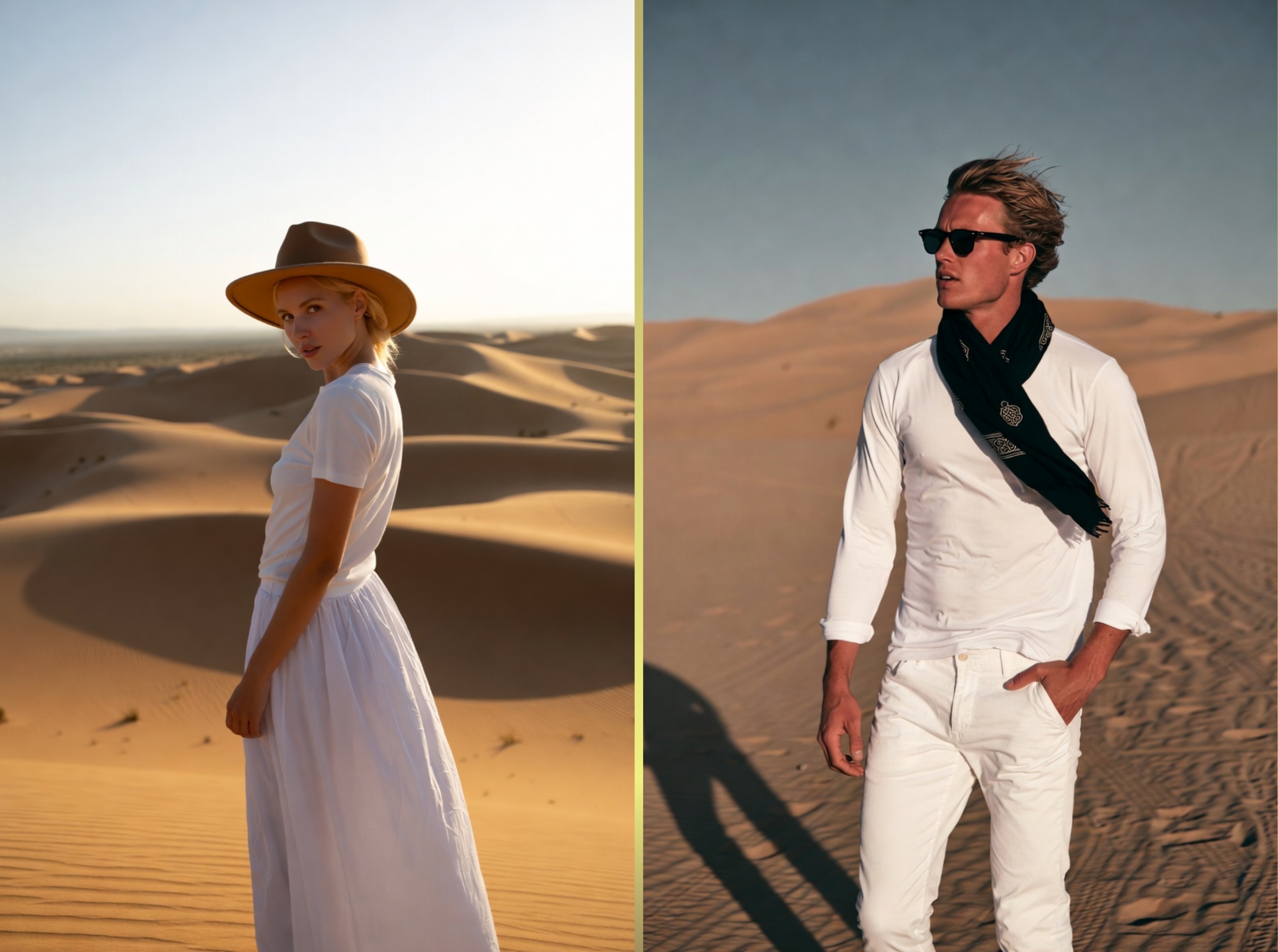
Summer in the Sahara is extremely hot, so it’s important to cover your skin while staying cool. Light, loose, and breathable clothes work best. Choose long-sleeve cotton shirts and thin trousers to protect your skin from strong sun without overheating. A wide-brim hat or a scarf is also useful to keep your head cool.
What to wear as a man in the Sahara during summer:
- Wear light, loose, breathable clothes
- Long-sleeve cotton shirts
- Thin trousers instead of shorts
- A hat or scarf to protect your head.
- Sunglasses.
What to wear as a woman in the Sahara during summer:
- Light cotton or linen trousers or long skirts
- A wide-brim hat or a scarf for head and face protection
- A light cotton dress is fine inside the camp, but avoid it during camel rides
- Sunglasses and strong sunscreen
What to wear in the Sahara during Autumn and Spring
In autumn and spring, temperatures are milder, but the sun is still strong during the day. You can wear the same light layers, but bring a thin hoodie for the evening. Nights can feel cool, especially in open areas. A scarf or shemagh is still helpful because the wind can blow sand at any time.
What to wear as a man or woman in the Sahara during autumn and spring:
- Mild temperatures during the day.
- The sun is still strong.
- Same light layers as summer.
- A thin hoodie for the evening.
- Nights can feel cool.
- Scarf or shemagh for sand and wind.
What to wear in the Sahara during winter
Winter in the Sahara is cold, especially at night. During the day, you can wear light clothes, but you must carry warm layers for the evening. A fleece jacket, a warm hoodie, and a windbreaker make a big difference. Winter nights can drop close to freezing, so it’s better to be prepared with enough layers to stay warm.
What to wear as a man or woman in the Sahara during winter:
- Light daytime clothes (long-sleeve tops and trousers)
- Warm layers for night: fleece jacket, warm hoodie, or padded jacket
- Leggings or thermal tights under trousers or skirts
- Warm scarf, beanie, or head cover for nighttime
- Thick socks for sleeping and early mornings
Shoes and Footwear
For walking around the camp and climbing small dunes, you need closed shoes. Simple sneakers or light hiking shoes work well. They protect your feet from hot sand and hidden stones. You don’t need heavy boots unless you plan long hikes.
Sandals are useful but only inside the camp. They are good for relaxing, going to the bathroom area, or walking short distances at night. Just make sure they have a back strap, so they don’t fall off in the sand.
Local Tip: The cotton scarf or shemagh that desert guides wrap around their heads isn’t just for show, it blocks sand far better than a typical buff or bandana. If you can, pick one up in a local souk before heading to the desert rather than relying on something you packed from home.
Avoid open shoes during the day when you are out exploring. The sand can get extremely hot and may burn your feet, especially in summer. Closed shoes keep you more comfortable and safe.
What to Pack for The Sahara: Self-care and Gadgets
When traveling to the Sahara, packing the right items for self-care and convenience is essential. Having these items on hand will help you stay comfortable, refreshed, and ready to enjoy your desert adventure.
Toiletries and Personal Care
The desert is dry, and your skin can feel tight or dusty. Carry basic items like lip balm, moisturizer, and sunscreen with high protection. These simple products make a big difference during your trip.
Wet wipes and tissues are very helpful in the desert. They make it easier to clean your hands or face when water is limited. Hand sanitizer is also useful, especially during camel rides or breaks in open areas.
Don’t forget any personal medication you need. Pharmacies are far from desert camps, so it’s better to have everything with you. A small basic first-aid kit with plasters and painkillers is also a good idea.
Gadgets and Electronics
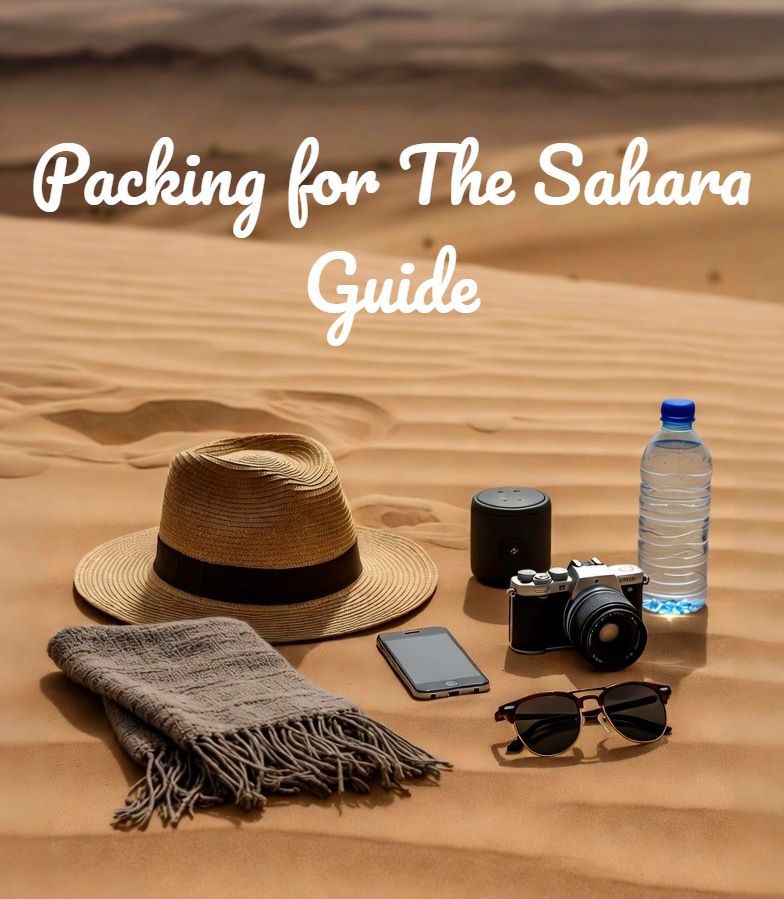
Electronics can make your Sahara trip easier and more enjoyable. A portable power bank is very important because many desert camps have limited electricity. This allows you to charge your phone, camera, or watch at any time.
A small bluetooth portable speaker can make evenings more fun. Many travellers enjoy playing soft music after dinner while sitting under the stars. Choose a small speaker that is easy to carry and has good battery life. You can easily find the best portable speakers online on websites like armosound.com.
Note: Avoid loud music in public areas because the desert is a quiet and peaceful place.
If you enjoy photography, bring a small camera or use your phone. The desert light is beautiful at sunrise and sunset. Just remember that sand can damage electronics, so keep devices inside a pouch or zip bag when you are not using them.
Power and Charging:
- Portable power bank (very important)
- Useful because camps may have limited electricity
- Helps charge your phone, camera, or watch anytime
Bluetooth Speaker:
- Camps offer music but a small Bluetooth speaker for soft music in the evening would be a bonus.
- Choose a light and easy-to-carry model
- Look for good battery life
- Avoid loud music to keep the desert peaceful
Photography:
- Bring a small camera or use your phone
- Best light is at sunrise and sunset
- Protect devices from sand by using a pouch or zip bag
Extra Items People Often Forget
A reusable water bottle is very handy. You can refill it at the camp or during the ride, and it helps you stay hydrated throughout the day. The desert heat can make you thirsty quickly.
A small backpack is useful during camel rides or 4x4 trips. You can keep your phone, scarf, sunscreen, and snacks close to you without holding them in your hands. Make sure the backpack is comfortable and easy to carry.
Finally, bring a flashlight or headlamp. Camps usually have lights, but not everywhere. A small light helps you move around safely at night and find your way back to your tent.
Before you go, it is important to know how long you will spend in the Sahara. If your tour lasts only a few hours, one set of suitable Sahara clothes is usually enough. However, if you are going on a multi-day trip, such as a journey to Erg Chebbi, you will need to pack more clothing and essential items.
Related Guides
- The Best Morocco Tours Packages to Book Online
- Visiting the Sahara in winter Is Not A Bad Idea
- Is Morocco Worth Visiting in 2026? The Answer Is “Yes”
- Everything You Need to Know Before Visiting Morocco (Q&A)