
Moroccan Food: The Best Dishes and Where to Find Them

Moroccan food blends Berber, Arab, Andalusian, and Mediterranean influences, and it shows in how the spices are used. Saffron, cumin, cinnamon, and ginger show up constantly, in ways that make the food feel both comforting and a little unfamiliar if you haven’t had it before.
We’re talking about slow-cooked stews in earthenware pots, fluffy grains piled high with veggies and meats, and sweet-savory combos that surprise your taste buds. Moroccan food, in a nutshell, is a perfect balance of hearty, healthy ingredients with bold seasonings, served in a communal way, often eaten with hands or bread.
If you’re planning a trip, diving into these dishes is a must to truly experience the country’s soul. We’ve rounded up the top 10 based on what tourists and locals alike can’t stop talking about—think classics that pop up in travel blogs, Reddit threads, and Lonely Planet guides. These picks highlight the diversity of Moroccan eats. And we’ll throw in where they’re traditionally served or famous in certain cities to help you hunt them down.
That said, Moroccan food can vary by region and season, so keep an open mind and ask locals for their twists. Vegetarians can rejoice since many dishes have meat-free versions. Before we dive in, check out our Moroccan recipes if you want a taste of Moroccan food made by your own hands. Alright, let’s get into it!
1. Tagine
Tagine is the quintessential Moroccan stew, named after the conical earthenware pot it’s cooked in, which traps steam and infuses flavors deeply. Typically, it features tender meat like chicken, lamb, or beef slow-cooked with vegetables such as carrots, potatoes, and zucchini, plus preserved lemons, olives, or dried fruits like prunes and apricots. The magic comes from ras el hanout, a spice blend of up to 30 ingredients including cinnamon, cumin, and saffron, simmered for hours until everything melts together.
What makes tagine so addictive is that sweet-savory harmony. Imagine juicy lamb with caramelized prunes or chicken brightened by tangy lemons. This dish is not just a meal but a symbol of Moroccan hospitality, often prepared for gatherings and shared communally. Tourists love it because every version feels unique, depending on the cook’s family recipe or seasonal produce.
You’ll find tagine everywhere, but Fez is famous for its intricate versions in family-run spots like Dar Hatim, while Marrakesh offers street-style takes in the medina. For the best experience, join a cooking class in a riad or hit up Casablanca’s Al Mounia. Pro tip: Go veggie if you’re plant-based since it’s just as flavorful.
2. Couscous
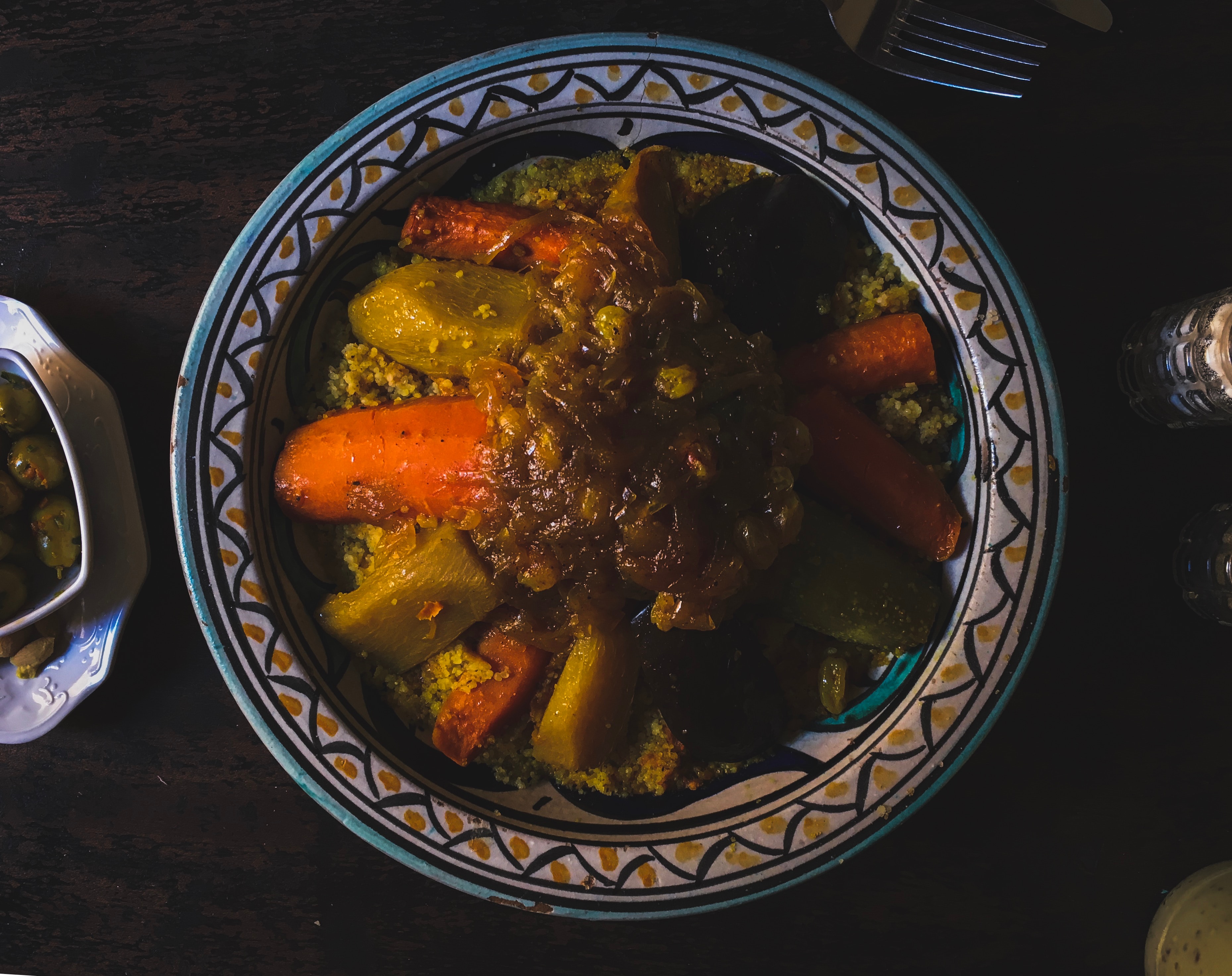
Couscous is Morocco’s national dish, made from steamed semolina grains that fluff up light and nutty, topped with a hearty mix of vegetables like cabbage, carrots, squash, and sometimes chickpeas or meat in a flavorful broth. Preparation involves layering the couscous over simmering veggies and protein, steaming it multiple times for that perfect texture, which is labor-intensive but worth it. Fridays are traditional couscous days, post-prayer.
This dish shines for its comforting, filling nature, absorbing all those spiced juices like a sponge. Culturally, it’s a Friday ritual that brings families together, emphasizing community and generosity since extra is often shared with neighbors. Travelers rave about it as the ultimate intro to Moroccan flavors. It’s full of vegetables, and you can ask to hold the meat.
Head to Casablanca for classic versions at places like Al Mounia, or Marrakesh for seven-vegetable couscous in riads. Fez offers authentic home-style in the medina. Tip: If you’re in a group, order a massive platter to share since that’s how locals do it, and call ahead for vegetarian options.
3. Harira
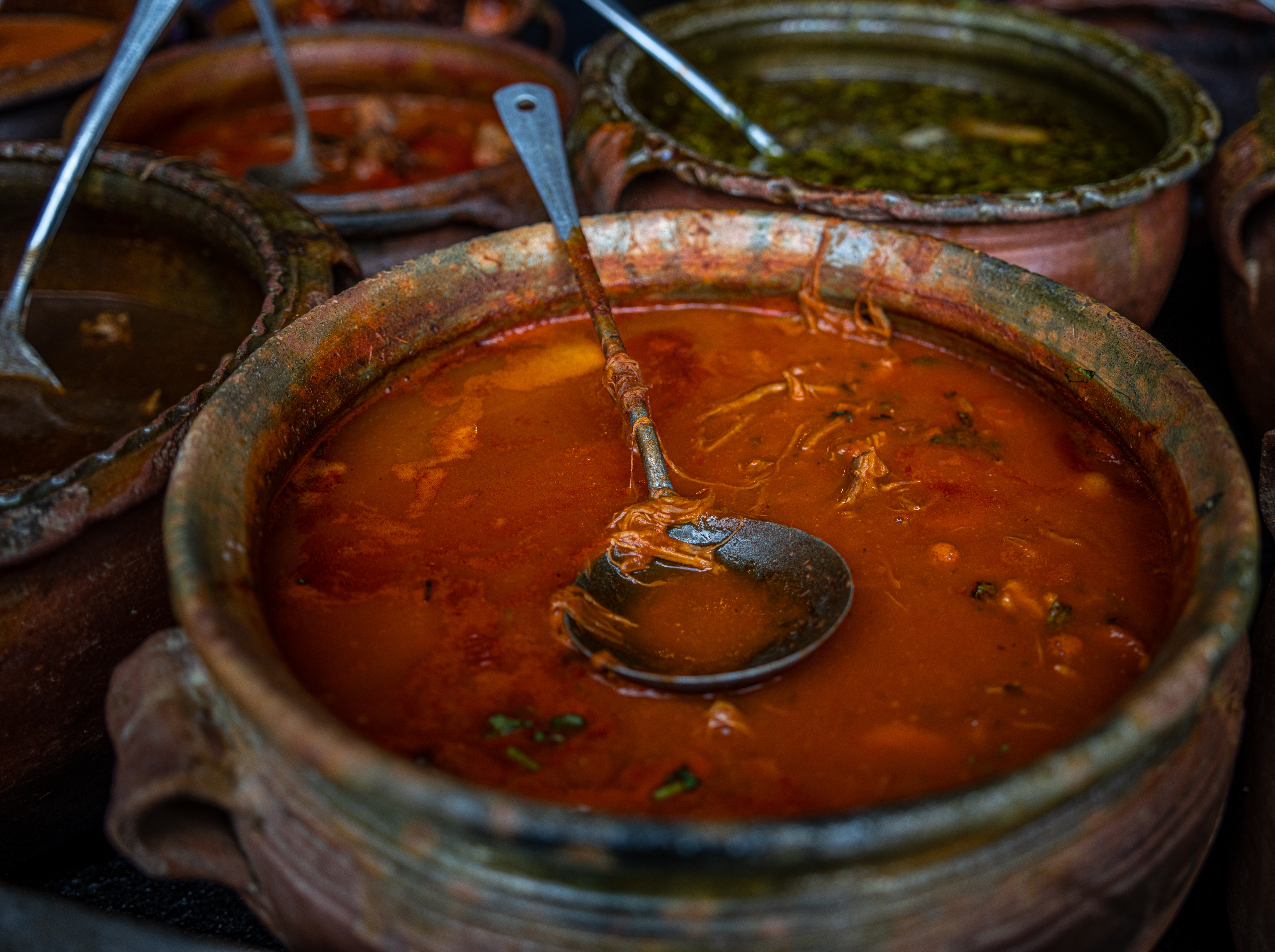
Harira is a thick, velvety soup that’s a staple, especially during Ramadan for breaking the fast. It’s packed with lentils, chickpeas, tomatoes, herbs like cilantro and parsley, plus spices such as ginger and turmeric, sometimes with bits of lamb or beef for extra heartiness. Simmered slowly, it’s finished with a squeeze of lemon for zing.
Locals and tourists adore harira for its nourishing, soul-warming qualities, silky smooth with a subtle spice kick that varies by region. It’s more than food since it’s tied to religious traditions, symbolizing sustenance and community during holy times. Foodies call it Morocco’s comfort food, perfect for chilly evenings or as a light starter. Also, add extra black pepper or chili powder, and you’ll have a great spicy soup to ease the flu.
You’ll spot it year-round in cafes across Morocco, but Rabat and Marrakesh shine during Ramadan with street vendors serving fresh batches. Try it in local eateries in Fez for a hearty version. Here’s another piece of advice: Add lemon and dates on the side for the full experience since it’s cheap and filling.
4. Pastilla, or Bastilla (My favorite Moroccan food)
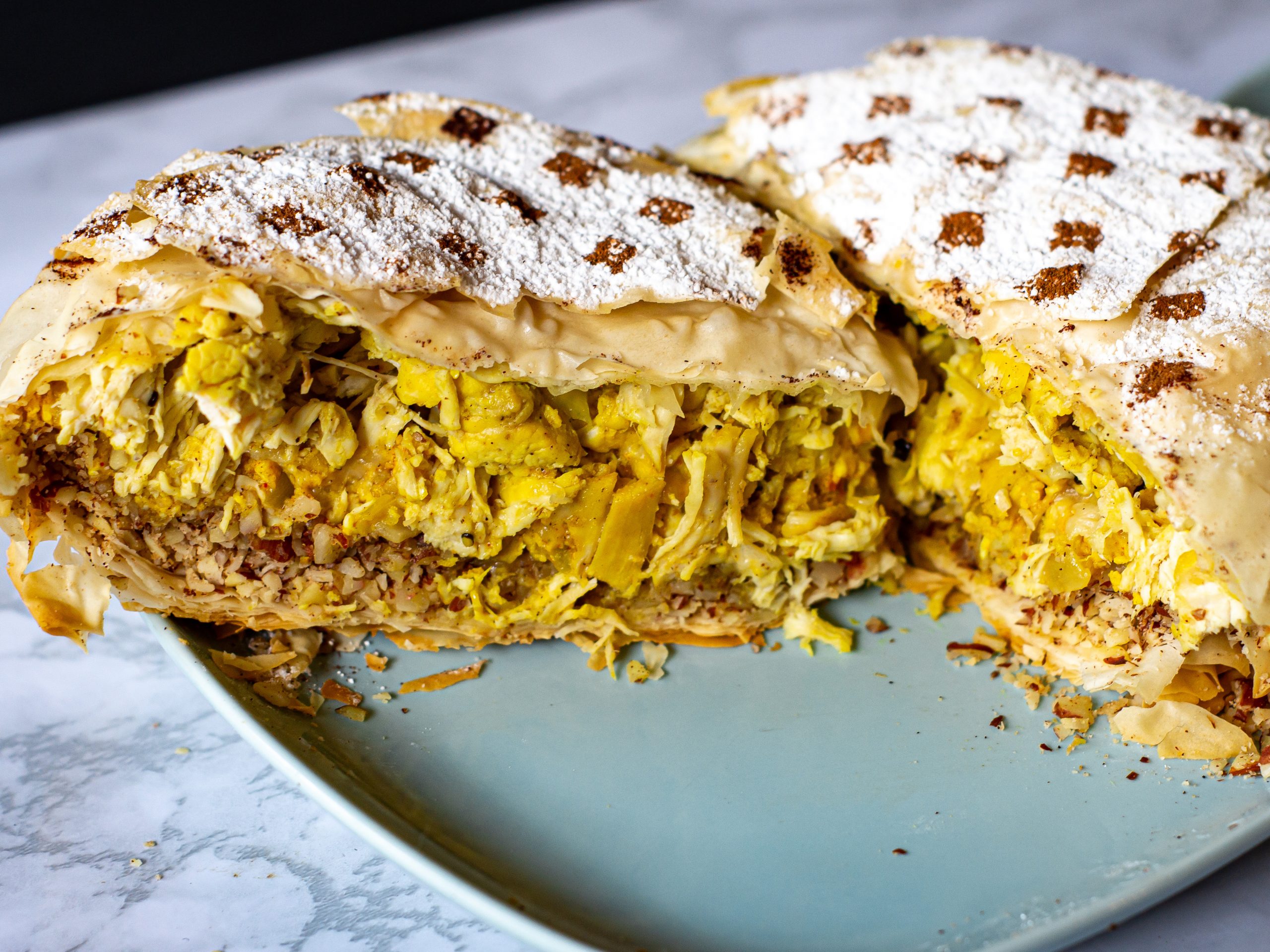
Ah yes… my favorite dish! Pastilla is a flaky, savory-sweet pie wrapped in thin warqa pastry, stuffed with fish, pigeon, or chicken, caramelized onions, eggs, and almonds, then dusted with cinnamon and powdered sugar. Baked until golden, it’s a labor of love with layers that crunch and melt. Seafood or veggie versions exist too.
Man, I’m making myself hungry! This dish wows with its unexpected combo of sweet and savory, like a gourmet chicken pie with dessert vibes. It’s a Fassi specialty from Fez, often served at weddings or celebrations, showcasing Morocco’s Andalusian heritage. Tourists flip for it as a must-try that’s elegant yet approachable. You’ll love it too, I’m sure.
Fez is the epicenter, so grab it at Ruined Garden or medina restaurants. Marrakesh has modern takes in upscale spots. Book ahead for classes to learn the folding technique since it’s messy but fun. Also, your family and friends back home will be amazed if you cooked it right for them.
5. Mechoui
Mechoui is whole lamb marinated with spices like cumin and paprika, then slow-roasted in an underground pit until it’s fall-off-the-bone tender with crispy skin. Carved fresh, it’s served with salt, cumin, and bread. Smaller portions use shoulders or legs.
It’s celebrated for that smoky, juicy flavor that’s pure indulgence, melt-in-your-mouth meat without fuss. Traditionally for big events, it embodies Moroccan feasting and nose-to-tail eating. Visitors love the spectacle and taste, especially in Marrakech.
Marrakesh’s Mechoui Alley is legendary for street-style servings, so try Chez Lamine too. It’s also available nationwide at markets for groups.
6. Tangia
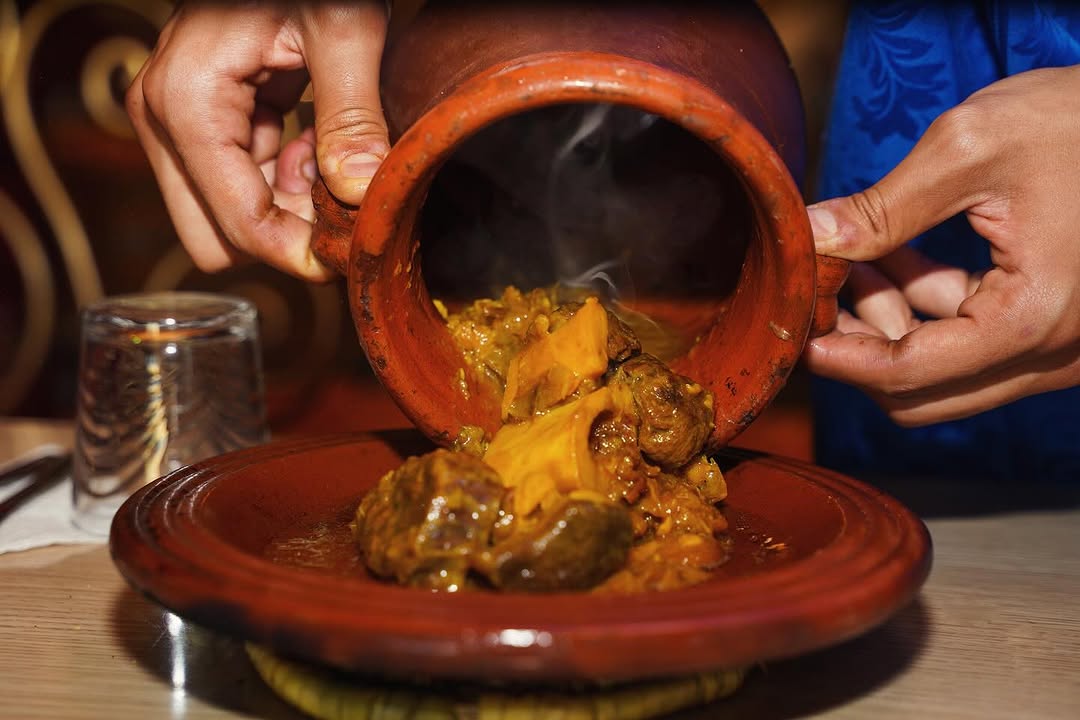
Tangia is a “bachelor’s dish” of meat chunks, preserved lemon, garlic, cumin, and saffron, sealed in a clay pot and slow-cooked in hammam ashes for hours until tender and saucy. It’s simple yet rich, eaten with bread.
The appeal lies in its deep, concentrated flavors from the unique cooking method, tender meat with zesty lemon notes. Originating in Marrakesh, it’s a guy’s night staple but loved by all for its no-frills deliciousness. Tourists dig the story behind it.
Exclusively Marrakesh-famous, so hit medina spots like Chez Lamine. Order in advance since it’s slow-cooked perfection. In other words, it takes time to be ready, unless you got lucky to find a place where they prepare early.
7. Zaalouk
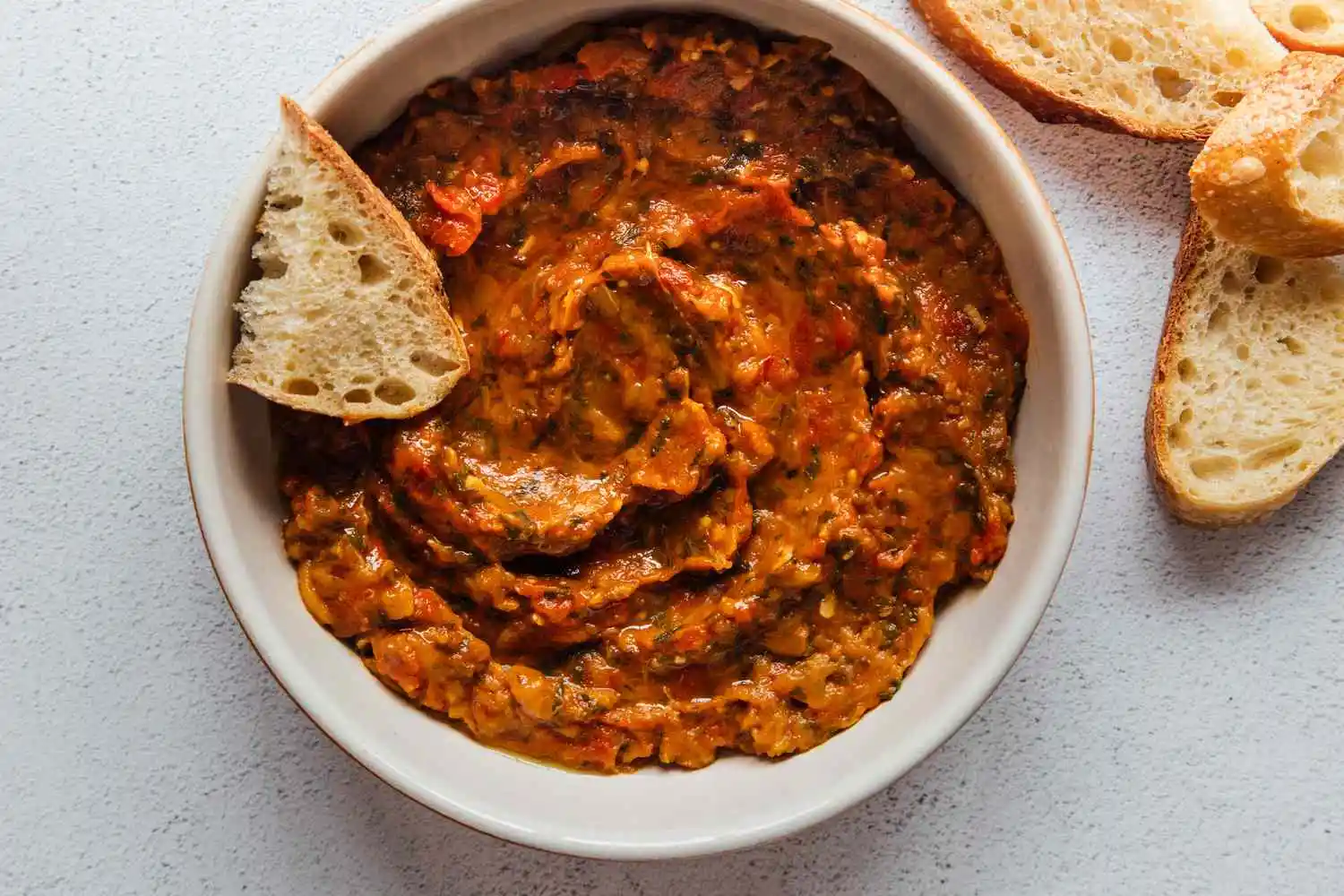
To be honest, this dish is my least favorite, but many tourists seem to love it, so let’s talk about it. Zaalouk is a smoky eggplant salad or dip, grilled eggplant mashed with tomatoes, garlic, herbs, cumin, paprika, and olive oil, sometimes spicy with chili. It’s served warm or cold with bread.
I guess it’s prized for its fresh, vibrant taste—smoky, garlicky, and versatile as a starter or side. A veggie favorite, it highlights Morocco’s love for simple, seasonal produce. Food lovers, especially vegetarians, seem to appreciate its healthiness and flavor punch.
Common nationwide, but Marrakesh markets offer fresh versions, so try in Fez riads. Scoop with khobz for the best bite, which is great for vegans. You can also ask for some olive oil and olives to go with it.
8. Kefta
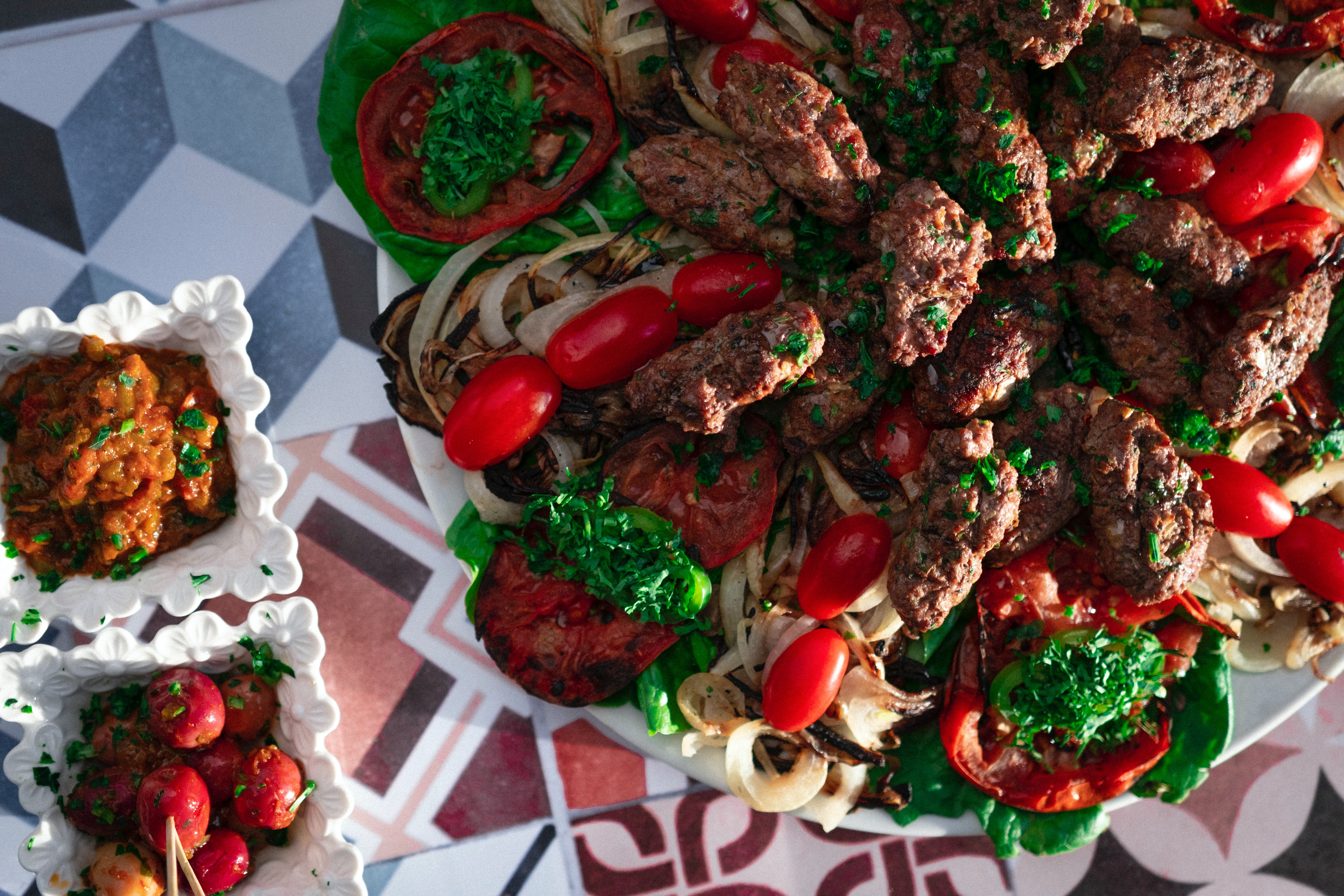
Kefta is a dish of spiced ground meat meatballs, often grilled as brochettes or simmered in tagine with eggs and tomato sauce. Mixed with onions, parsley, cumin, and paprika, they’re juicy and aromatic.
It stands out for its bold spices and versatility, street snack or main course. Kefta represents Moroccan grilling culture, the second after boulfaf, which is another dish we’ll talk about later. Tourists love the kefta tagine for its comforting, eggy twist.
Marrakesh street stalls for brochettes at Djemaa El Fna, and Fez for tagine versions. Pair with harissa for heat since it’s affordable and addictive. Maybe some mint tea on the side for more Moroccan flavors.
9. Rfissa
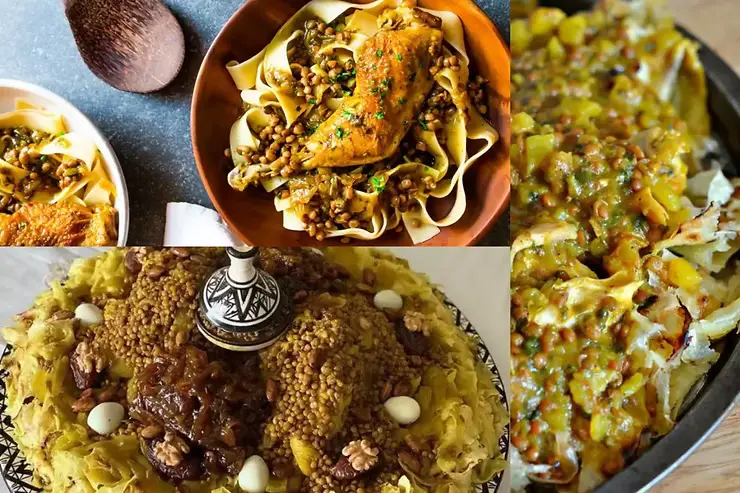
Rfissa is a hearty chicken and lentil stew over shredded msemen bread or trid pastry, flavored with fenugreek, saffron, ginger, and ras el hanout, sometimes with pigeon.
It’s comforting like a Moroccan chicken noodle soup, with earthy lentils and tender poultry. Often for special occasions or postpartum recovery, it’s nourishing and flavorful. It’s under-the-radar for tourists but a local gem.
Fez and Marrakesh for home-style, so try in riads. Seek family invitations for the real deal since it’s warming and unique. This could be challenging, but with a good guide, you might get lucky.
10. Chebakia
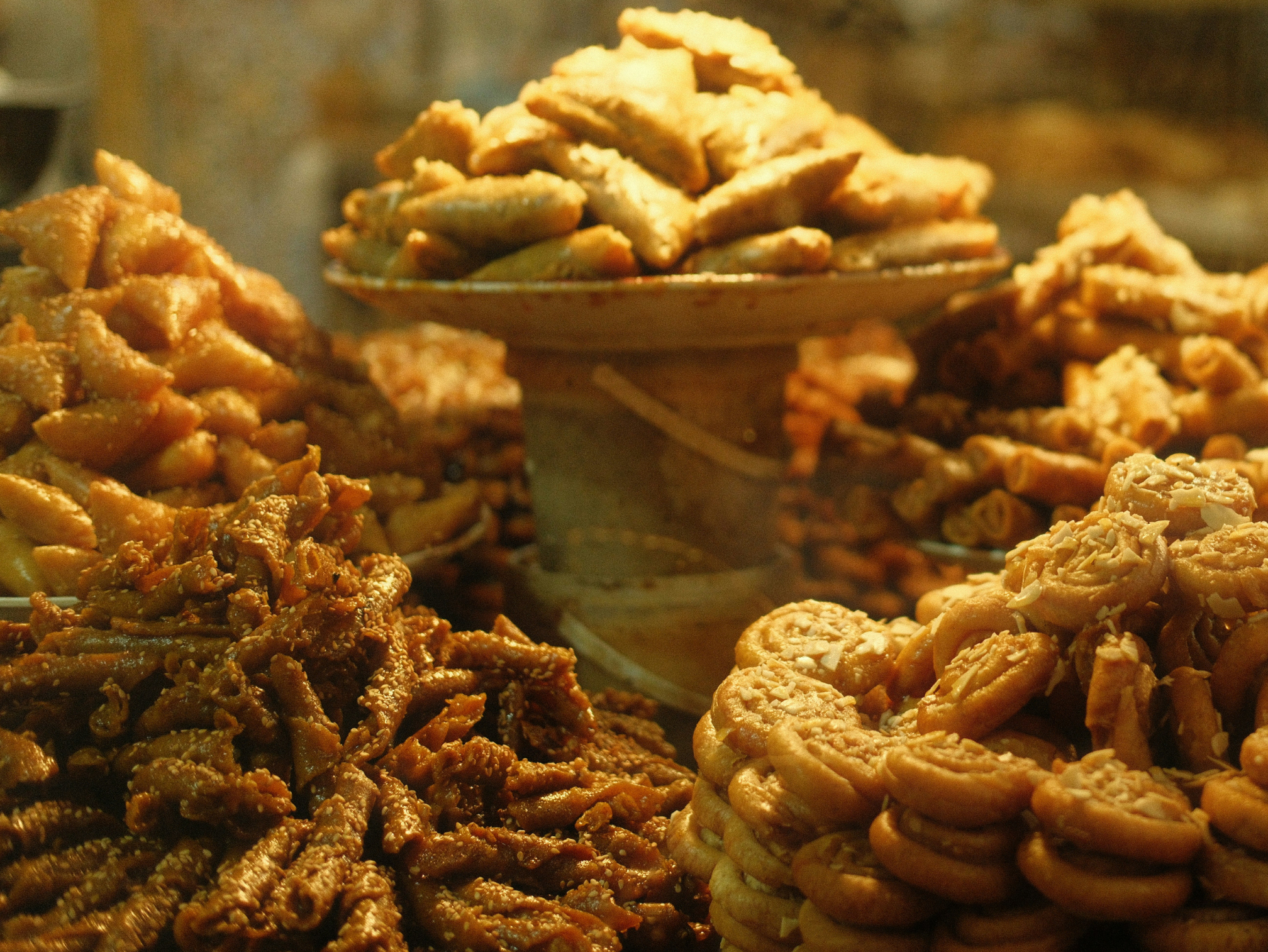
Chebakia are twisted, deep-fried pastries flavored with anise, cinnamon, and saffron, then soaked in honey and sprinkled with sesame. They are crunchy on the outside and sticky inside, and often enjoyed with other Moroccan sweets like sellou, a mix of roasted flour, almonds, and honey, or briouats, crispy pastry triangles filled with almond paste and dipped in honey.
Famous for their addictive sweetness, these treats are Ramadan staples that symbolize festivity and generosity. Tourists love them as sweet snacks with tea, especially after a long day of exploring.
You can find great versions in Marrakesh patisseries such as Bazaar Café or in Ait Ben Haddou for local variations. They are very sweet, so it might be a good idea not to eat too much, especially if you plan to have them with mint tea.
11. Boulfaf
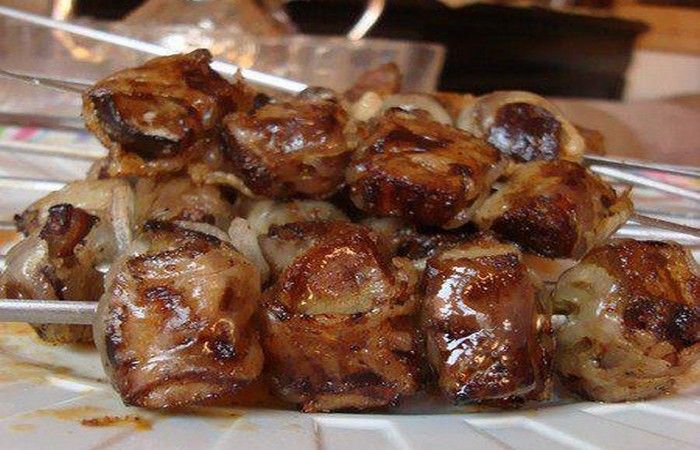
Boulfaf is a classic Moroccan kebab made from tender cubes of lamb or beef liver, seasoned simply with cumin, paprika, salt, and a kick of cayenne or black pepper, then wrapped in thin sheets of caul fat, that lacy membrane from around the sheep’s organs. The name comes from the Arabic “laffa,” meaning to wrap or roll something inside, which is exactly what happens before skewering and grilling over hot coals until the outside crisps up golden and the inside stays juicy pink.
It’s often the first dish whipped up post-slaughter during Eid Al-Adha, using the fresh liver from the sacrificed sheep, goat, or cow. This dish is all about that perfect contrast, the rich, creamy liver melting against the crunchy, fatty wrap that keeps everything moist and adds a subtle savoriness without overpowering the meat. Spices are kept minimal to let the fresh organ shine, but that cumin-forward rub gives it an earthy, aromatic edge that’s pure Morocco.
Tourists who try it rave about the simplicity, calling it a far cry from bland Western liver and pâté, more like a gourmet street skewer with heart. You’ll find boulfaf popping up nationwide during Eid, but Marrakesh’s Jemaa el-Fna square is legendary for its bustling stalls grilling fresh batches amid the festival chaos. In Fez, head to the medina’s offal specialists for a more intimate family-style serving.
By the way, you may think about visiting Morocco during Eid Al-Adha to enjoy some of the best dishes that are specific to this holiday (like boulfaf), especially if you’re a meat lover. However, visiting Morocco during the Eid Al-Adha holiday might also come with some challenges. Read more about it here.
Final Thoughts on Moroccan Food
These dishes capture what Moroccan food is really about, spicy, sweet, and meant to be shared. They might overwhelm your senses a bit at first, but that’s part of the experience. Plan around markets and riads for the freshest bites.
Don’t forget to check out these guides. Your trip to Morocco will be memorable if you are equipped with enough knowledge on how to navigate this country like a local.
Related Guides
- Moroccan Tagine Cooking Class is a Must-Do
- Is Morocco Worth Visiting in 2026? The Answer Is “Yes”
- Everything You Need to Know Before Visiting Morocco (Q&A)
- Things to Do in Morocco for Tourists and Travellers


